



Let’s clear the air. If you’ve ever felt pressure to learn JavaScript, Python, or any other programming language just to stay relevant, you’re not alone. For years, the loudest voices online pushed the idea that the only path to building digital products was through lines of code. But the truth is simple: you don’t need coding to create tools, apps, or digital systems that people love. What you need is something far more valuable UX experience.
We now live in a world that rewards clarity, empathy, and problem-solving. These are the qualities that shape successful digital products, and they have nothing to do with syntax or debugging. When you understand how people think, what frustrates them, what motivates them, and how they use technology in their real lives, you gain an advantage that pure coders often miss. That’s why you don’t need coding to get started. The skills that matter most sit outside of code.
Small business owners want products that support customers without extra complexity. Busy mums want tools that save time and reduce stress. Gen Z creators want fast, intuitive ways to bring ideas to life. Startup founders want to move quickly. Healthcare workers want systems that make their work easier, not harder. In every one of these cases, UX experience makes the biggest difference.
So if you’ve been stalling because you think the lack of programming knowledge blocks your progress, let that belief go. The era of “learn to code or get left behind” is over. Now, you don’t need coding to build something meaningful—you need the ability to understand people. And that’s a skill you can learn, practise, and strengthen every day.
This blog will show you why UX experience gives you a long-term advantage, how to apply it even as a beginner, and why coders often look to UXers for direction. Let’s dive in.



Many people still assume that developers control the digital world. But the products that win today aren’t the ones with the fanciest code—they’re the ones that feel simple, clear, and supportive. And this is exactly why you don’t need codingto shape the future of digital creation.
Think about your favourite app. You probably love it because it’s easy to use, not because someone programmed a clever function behind the scenes. UX is the part that guides people through an experience with ease. It answers questions before users even ask them. It reduces the mental load. It keeps people coming back because it “just works.”
Here’s what this means: if you understand UX, you already have the ability to build a useful digital product even if you don’t need coding to make it happen.
Let’s look at real-life examples:
Example 1: The busy mum automating her weekly tasks
She doesn’t want to learn HTML or Ruby just to set up a system that manages school reminders. She wants something easy. So she uses a no-code tool, applies UX thinking, and builds a simple dashboard for her family. She succeeds because she understands people—her kids, herself—and the flow of daily life. She doesn’t need coding.
Example 2: The small business owner improving customer bookings
He notices customers struggle to confirm appointments. Instead of diving into APIs, he maps the steps customers take, spots the friction, and uses a drag-and-drop builder to streamline the process. The result? Higher bookings. He focuses on UX, not code.
Example 3: The Gen Z creator launching a digital product
She builds a tool for her followers using AI and a no-code app. The product takes off because she understands what her community needs. The UX is smooth. The message is clear. She didn’t need coding.
UX is not an add-on. It’s the foundation that guides every successful build.
This is why you don’t need coding to shape a powerful product. You need to understand people, patterns, behaviours, and journeys. And once you master that, you can build anything.
Buy on Amazon

You might not realise it, but being someone who believes you don’t need coding to begin puts you in a stronger position. UX gives you a skillset that cuts across industries, ages, and backgrounds. And it makes you the kind of person teams rely on when they need clarity.
Coders often end up deep in technical details. They’re problem solvers—but their focus is on the system, not the human. UX experience fills that gap. When you bring UX knowledge to the table, you are the bridge between what people need and what technology can do.
This makes you don’t need coding more than a belief. It becomes your competitive edge.
Here are three reasons why:
- Coders build what you imagine
When you communicate a clear user journey, a coder can bring it to life. Your UX thinking is the spark. You don’t need coding to lead the direction.
- You see problems coders don’t
A developer may fix errors. You fix experiences. You notice emotions, habits, frustrations, motivations. These insights drive product success.
- Tools now do the coding for you
With modern AI and no-code platforms, you don’t need coding because the systems do the heavy lifting. You give the instructions. The platform handles the technical translation.
This shift means that your ability to map journeys, design flows, and interpret user needs holds more influence than writing a script. You’re no longer behind the scenes—you’re steering the creation.
Let’s bring this into your everyday world. Whether you run a business, work in healthcare, create content, or lead a startup, you don’t need coding to improve systems and solve problems.
Small business owners
You can build booking tools, automations, customer feedback loops, and digital experiences without touching code. UX thinking guides what needs fixing.
Busy mums
You can design simple workflows using no-code tools to organise family life. UX helps you make things smoother and calmer.
Gen Z creators
You can launch apps, templates, brand tools, and digital products. You don’t need coding when your creativity and UX instincts lead the build.
Startup founders
You move fast. UX gives your idea clarity before you spend money on development.
Healthcare professionals
You can design systems that reduce stress, improve patient flow, and fix hidden problems in daily routines. UX beats code when the goal is human wellbeing.
UX professionals
Your value grows when you master the art of translating user needs into product behaviours. Your strength is not code it’s insight.
Across every role, the same truth stands: you don’t need coding. You need the ability to understand people and turn those insights into clear solutions.
It’s easy to believe that learning to code is the only ticket to building digital products. For years, “learn to code” was the advice given to anyone who wanted to shape the digital world. While understanding code is still valuable in some fields, it’s no longer required for most people who want to create useful apps. What’s becoming far more important is understanding user experience. That’s why you don’t need coding to get started—you need clarity, empathy, and the ability to shape simple flows that solve real problems
UX is what shapes the product. Code only executes the instruction.
You see this message repeated throughout the book because it’s a major shift in how digital products are built. With no-code tools, AI, and Vibe Coding, you don’t need coding to create something powerful. You need a clear understanding of your user, a sense of flow, and the ability to test and refine.
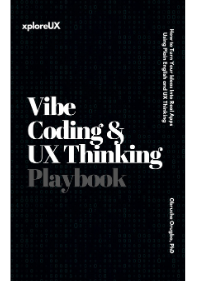
This book gives you the full strategy behind why UX thinking now outranks technical skill. If you want the complete step-by-step roadmap, get the full book here:

Here’s a beginner-friendly framework anyone can use, even if you don’t need coding to follow it:
Step 1: Identify the problem
Ask: “What do people struggle with?”
Don’t guess. Observe. Listen. Research.
Step 2: Map the journey
Break the task into small steps.
UX is about flow, not features.
Step 3: Remove friction
Find the moments where people get stuck.
Simplify language, processes, and choices.
Step 4: Build with a no-code tool
Choose one that fits your goal: web builder, automation tool, mobile app builder, AI workflow system.
This is where you don’t need coding becomes reality.
Step 5: Test early
You don’t need a full build.
Test with real humans.
Watch what confuses them.
Step 6: Improve and publish
Refine based on feedback.
Go live, then keep tweaking.
UX is not a one-time task.
It’s a living system.
Even when people understand that you don’t need coding, they still fall into common traps:
Mistake 1: Trying to build everything at once
Start with one clear goal.
When you chase ten features, you lose the user.
Mistake 2: Skipping user research
Even a five-minute conversation gives insight.
Don’t rely on assumptions.
Mistake 3: Overcomplicating the interface
More buttons, more pages, more colours—none of this helps.
Keep it simple.
Mistake 4: Copying other apps
Your user may not want what another app offers.
Your decisions must be rooted in your own research.
Avoid these traps and you’ll quickly see why you don’t need coding to build a product people love.
Ready to take things further? Here are growth-minded strategies that help you thrive without learning to code:
- Pair UX with AI tools
AI gives you ideas, layouts, flows, and content.
You provide the insight.
- Document your UX decisions
Write down why you made certain choices.
It builds confidence and helps you communicate clearly.
- Build a lightweight design system
You don’t need coding to create reusable styles, components, or page patterns.
This speeds up future builds.
- Start testing before building
Use sketches, sticky notes, or simple wireframes.
This reduces mistakes and saves time.
- Practise micro-UX
Micro-copy, cues, guidance, and subtle behaviours matter more than people think.
Strong micro-UX makes your product feel polished without code.
These tips remind you that you don’t need coding. You need judgement, empathy, and a commitment to shaping a smooth experience.









The idea that you don’t need coding to build digital products is more than a trend—it’s the new reality. Tools have changed. User expectations have changed. The digital world now rewards people who understand behaviour, clarity, and ease of use far more than those who simply write code.
UX experience puts you in control. It helps you solve real problems for real people. It helps you build products that feel natural and enjoyable. It gives you an advantage across industries, careers, and life stages. Whether you’re a small business owner trying to automate tasks, a creator launching new ideas, a professional improving workflows, or someone exploring digital building for the first time, UX gives you the strength you need to create something meaningful.
The message is simple: you don’t need coding to get started. You need the ability to understand people. And that skill is already within your reach.
If you want support applying UX thinking to your projects, ideas, or business, explore our services here: xploreUX Services
The UX & AI Playbook: Harnessing User Experience in an Age of Machine Learning
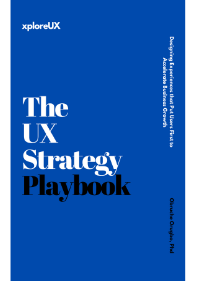
The UX Strategy Playbook: Designing Experiences that Put Users First
The UX Consultant Playbook 1: Bridging User Insights with Business Goals
The UX Consultant Playbook 2: Crafting High-Impact Solutions
The UX Deliverables Playbook: Communicate UX Clearly & Confidently
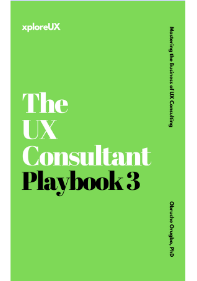
The UX Consultant Playbook 3: Mastering the Business of UX Consulting
Vibe Coding & UX Thinking Playbook: How to Turn Your Ideas Into Real Apps Using Plain English and UX Thinking





2 comments
Super helpful — bookmarked for future reference.
That’s good to know, and thanks.